Arts & Entertainment
Dominick Di Meo, ‘Monster’ Mid-Century Artist Who Emerged in Chicago, Dies at 97
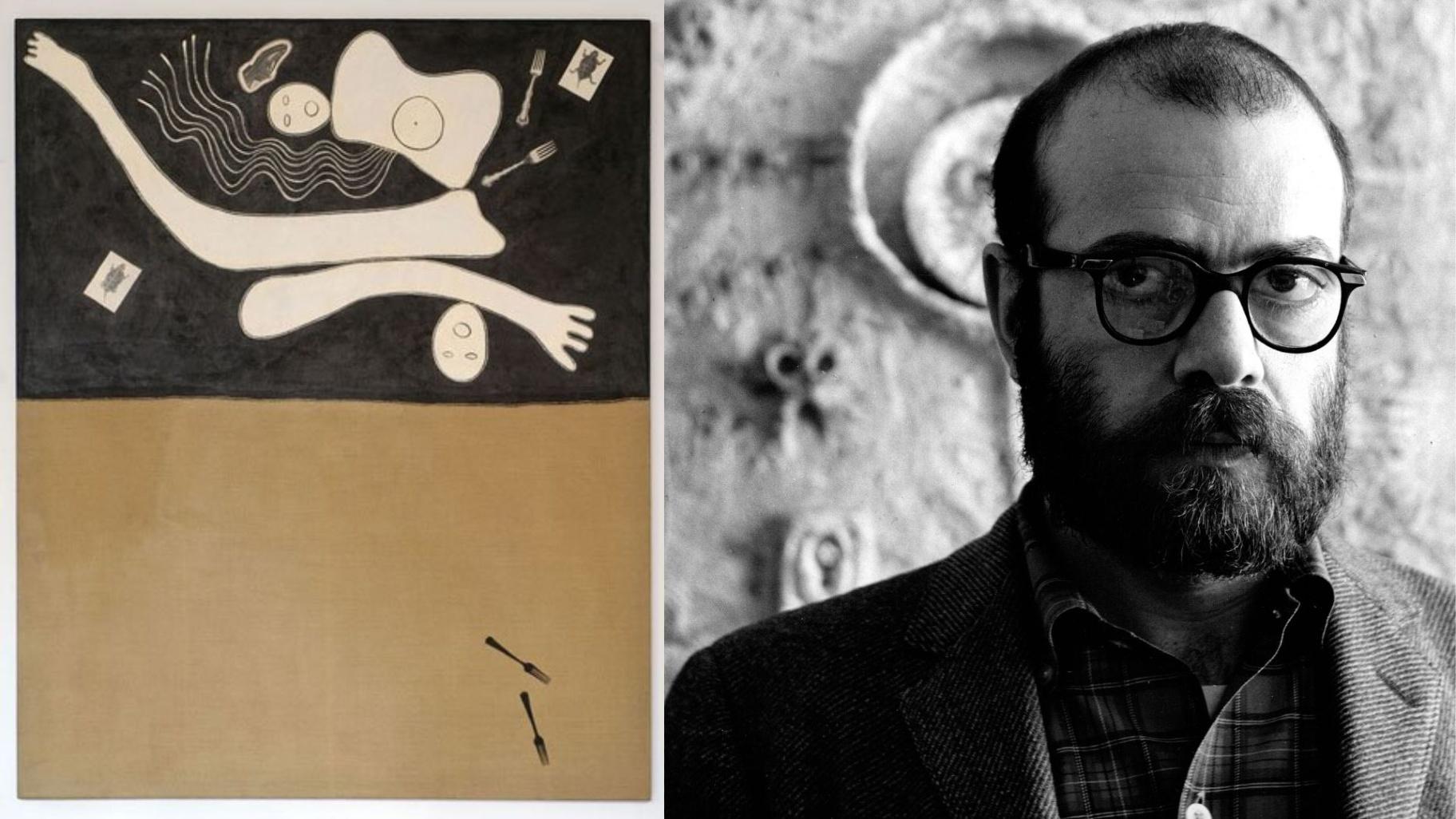 Left: “Floating Menace” by Dominick Di Meo, 1967. Right: Dominick Di Meo, 1964. (Courtesy of Corbett vs. Dempsey)
Dominick Di Meo, an essential figure in the postwar Chicago art scene, has died at the age of 97. His death was announced this week by the Chicago gallery that represents him, Corbett vs. Dempsey.
In 1952 the Cold War was bitter, the United States detonated a hydrogen bomb, and Di Meo graduated from the School of the Art Institute of Chicago.
In this era of uncertainty, Di Meo became part of an art circle known as the Monster Roster long before the loose ring of artists was given the nickname.
The Monster Roster is often overlooked. Curator and gallerist John Corbett called it “the first full-fledged movement in Chicago art history.” At a time when abstract expressionism was the prevailing wave, the Monster Roster swam against the current by embracing figurism, albeit in abstracted forms.
Tormented figures in the art reflected the anxiety of the times. Rough-hewn painted surfaces could be dark and dramatic as in the works of Leon Golub, a World War II veteran who attended art school on the G.I. Bill.
“Di Meo favored an earthen palette and often used low-relief elements in his paintings,” Corbett told WTTW News. “Unlike many of his contemporaries, Di Meo always had a sense of humor — dark humor.”
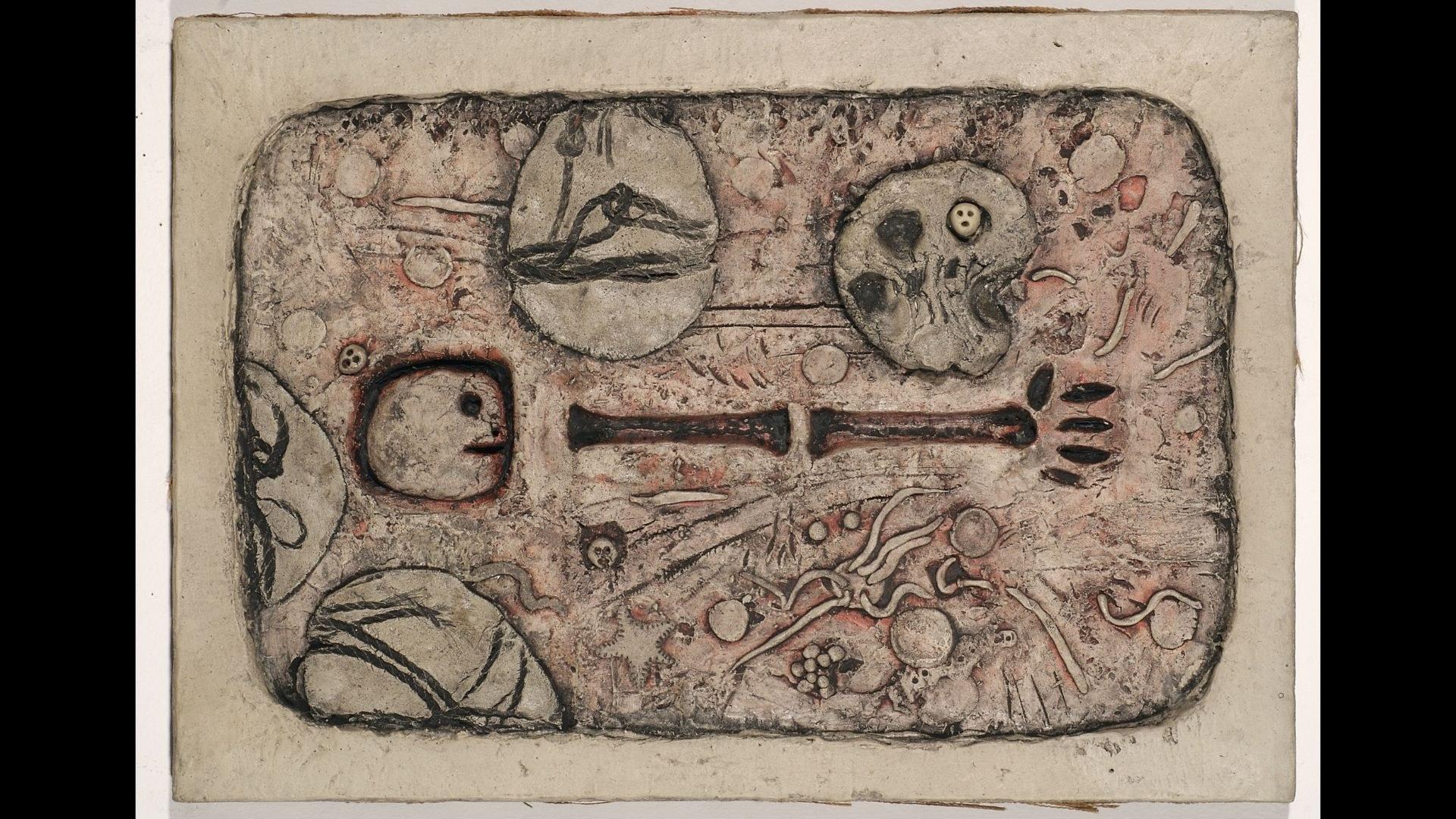 Untitled work by Dominick Di Meo, 1961. (Courtesy of Corbett vs. Dempsey)
The Monster Roster artists shared a love of the Field Museum of Natural History. Corbett described the museum visits as a vital step, “breaking them out of a myopic and ethnocentric set of references and exposing them to non-canonical non-western art.” It inspired artists like Di Meo “to look far afield from the usual influences that art students of the era would have been expected to absorb.”
The Monster Roster was also linked by a fearless approach to materials. Di Meo experimented with poured enamel, plastic and assemblage. And he helped stage juried art shows that had painter Jackson Pollock and architect Ludwig Mies van der Rohe on the jury, among others. These shows, titled Exhibition Momentum, helped establish Chicago as a factor on the national scene in the 1950s.
In the ‘60s, Di Meo committed to the anti-war effort and made banners for protests against the Vietnam War. He was generous with younger artists who became part of the Chicago Imagist movement, including Jim Nutt and Karl Wirsum.
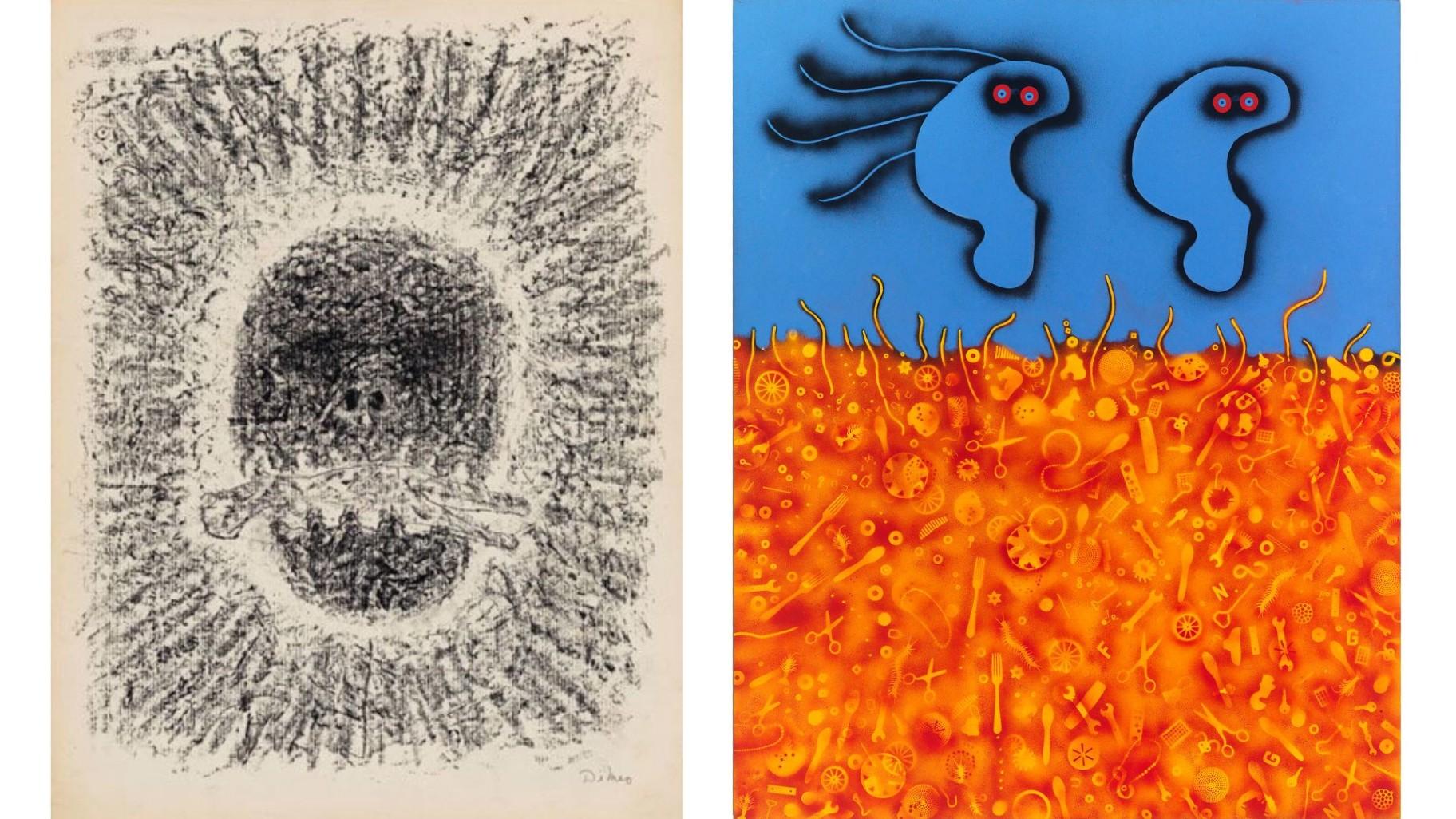 Left: Untitled work by Dominick Di Meo, 1950s. (Courtesy of Corbett vs. Dempsey) Right: Untitled work by Dominick Di Meo, 1965. (Courtesy of Di Meo and DePaul Art Museum)
A native of Niagara Falls, New York, Di Meo moved back to his home state in 1969 and remained in New York City for the rest of his life.
In 2013, Di Meo had a solo show at the DePaul Art Museum. His work was also part of a 2016 exhibition at the Smart Museum of Art at the University of Chicago — “Monster Roster: Existentialist Art in Postwar Chicago,” featuring fellow artists Golub, June Leaf and Seymour Rosofsky.
The Monster Roster name was coined by critic and fellow artist Franz Schulze, who noted the “vigorous and unique” work produced by “tough minds.”
Di Meo died on July 11. He is survived by his wife and a daughter from an earlier marriage. He was the last surviving member of the Monster Roster.
Thanks to DePaul Art Museum, the Smart Museum of Art and Corbett vs. Dempsey for research material.